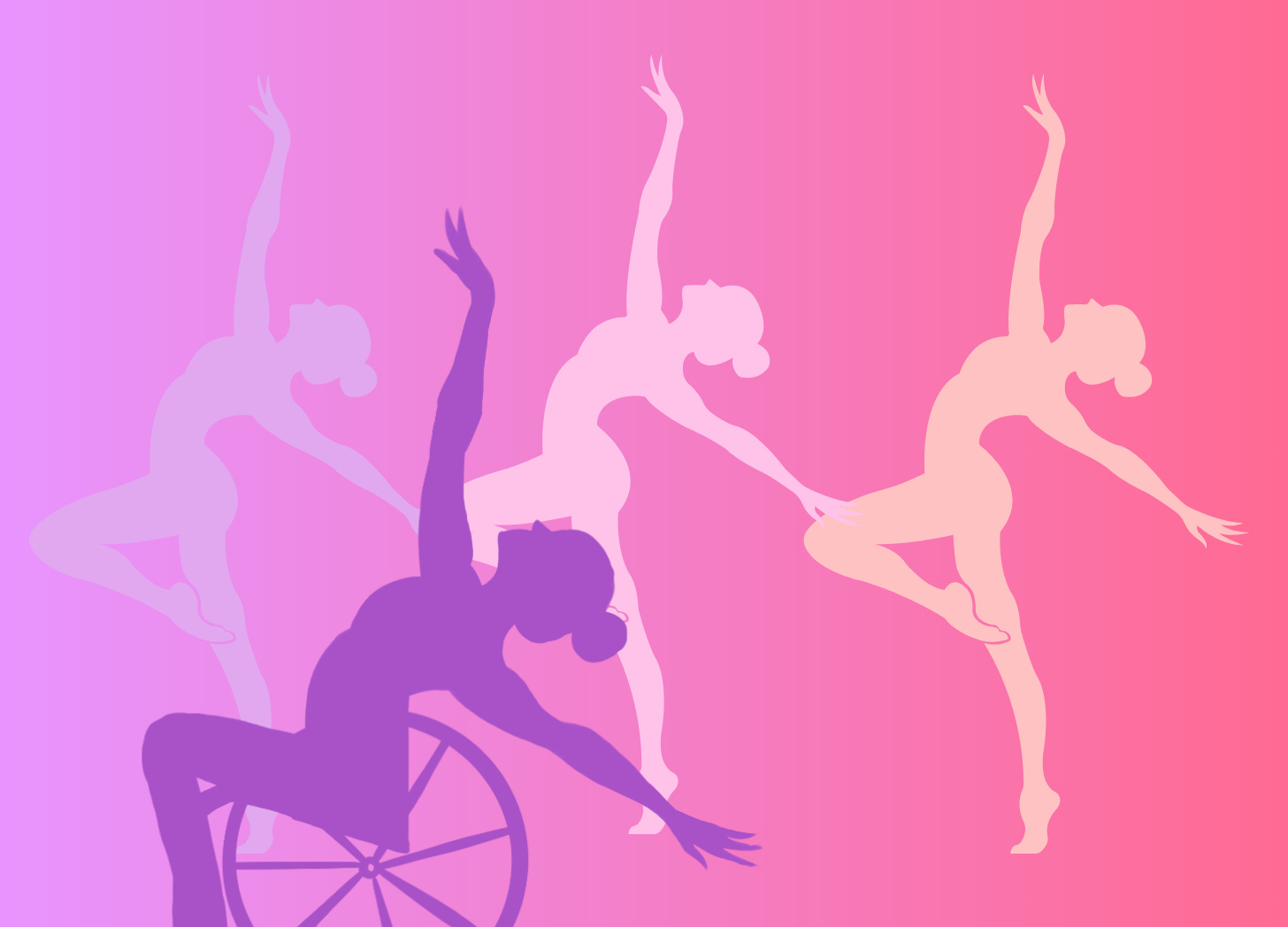
On Being the Only Disabled Dancer in the Studio
I had to work to answer the questions about my body two times over: not only as a child, but as an adult who found the strength within herself to move in the capacities she could.

The first thing you come to understand, in any form of dance, is your body.
How do I move it? What can I do? What are my limits?
We learn it by pointing and flexing our toes, over and over again. Conditioning every body part to measure up to the task, to always move with grace and accuracy.
The first thing you come to understand with gaining a physical disability is *still* your body, but laced with uncertainty and the possibility of dependency. The questions we ask turn from “hows” to “ifs.”
Can my body still move? What can my body do? Are my limitations complete and forever?
But instead of dance classes, these are doctors telling you that pointing and flexing your toes is no longer an option for you. Your potential in what you can do with your body is taken from you and what you keep hold of is limited. Because the answers become non-negotiable for you with a disability, there is a lot of weight that sits in the second set of questions.
It was a lot of weight to carry from my house to my car to my first dance class in three years.
For me, it wasn’t about how well I’d be accepted and it wasn’t even about picking up dance as a sport again as I had still been dancing at home. I had made excuse after excuse to myself about why I shouldn’t get back in the studio and most of them started with the idea that I wouldn’t, and couldn’t, be good enough.
I entered the studio for the first time in three years. The music was loud, and it felt like breathing underwater compared to the ablebodied dance experience.
Because I use a wheelchair full time, I don’t get to decide my main limitation in my movement: I will always be seated while dancing. No footwork, no hips. That does not change, no matter what I do. Every full-body movement an ablebodied dancer makes has to be adapted for me in order to get the same result.
At first, I lagged behind. I could think of substitutes for some footwork and jumps and kicks, but my confidence took a hit after every class when I realized I came out not being able to consistently perform the combo I had just adapted. My mental energy was spent from having a harder 75-minute class than every other dancer in the room.
It occurred to me, and it kept me motivated to go back:
I know my body better than anyone else in the room.
I had to work to answer the questions about my body two times over: not only as a child, but as an adult who had gained a life-changing impairment and found the strength within herself to move in the capacities she could.
I found that I had answered the aforementioned questions about my body, my skills, and my limitations, because my life has forced me to face them time after time, and with much more depth and clarity because of my disability.
My mistake in waiting to get back to the studio for so long was the fact that I felt like the absence of footwork was enough to justify my not being good enough, despite the fact that I’ve been dancing, moving, athletic for the majority of my life and into life after my disability.
I really was qualified to be there and I was more than “good enough.” It wasn’t about how fast or well I could move, it was about moving what I could and celebrating my own musicality. Even though I continue to be the only wheelchair dancer in the majority of dance spaces I enter, I, too, am a dancer and will forever deserve the title. ♡